The climate ambition plan
and environmental resilience
Initiated and led by the Israeli Climate Forum, founded by the President of the State, KKL-JNF and Aklima.
In a reality where environmental and climate challenges are growing at a fast and threatening pace, there is no doubt that the more resilient the local authority is, the greater its ability to safeguard the well-being and quality of life of its residents and recover from emergency situations. This is how the climate ambitionand environmental resilience plan of the local government in Israel was born.
The elected authorities will promote a significant and reality-changing move in the territories of the authority in one or more of the following four areas:
- Environmental-community resilience and preparedness for extreme climate events
- Environmental resilience and open spaces (path to the regional councils)
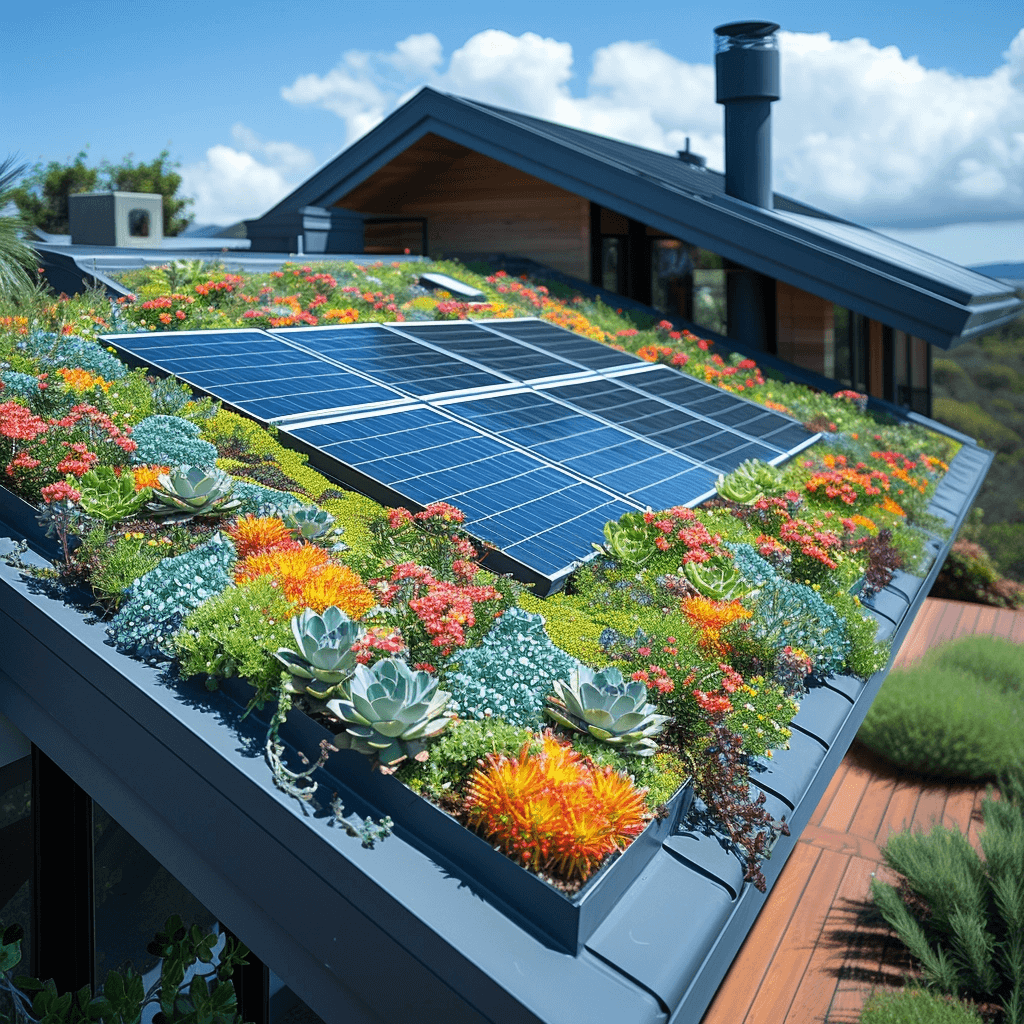
– Energy resilience
- Mobility and accessibility as a key to transportation resilience
The goal of the climate ambition plan of the local government in Israel is that the diverse and high-quality team chosen will lead an ambitious municipal policy course, which will strengthen the environmental-climatic resilience of the municipality, and will achieve goals already in the current term.
You can contact us by email: [email protected]

In a reality where environmental and climate challenges are growing at a fast and threatening pace, there is no doubt that the more resilient the local authority is, the greater its ability to safeguard the well-being and quality of life of its residents and recover from emergency situations. This is how the climate ambitionand environmental resilience plan of the local government in Israel was born.
The elected authorities will promote a significant and reality-changing move in the territories of the authority in one or more of the following four areas:
- Environmental-community resilience and preparedness for extreme climate events
- Environmental resilience and open spaces (path to the regional councils)
– Energy resilience
- Mobility and accessibility as a key to transportation resilience
The goal of the climate ambition plan of the local government in Israel is that the diverse and high-quality team chosen will lead an ambitious municipal policy course, which will strengthen the environmental-climatic resilience of the municipality, and will achieve goals already in the current term.
You can contact us by email: [email protected]
הרשויות המקומיות המשתתפות בתוכנית











The authorities of the team and their objectives
The highlight of the program is the commitment of the heads of the authorities, who pledged to lead a significant, comprehensive, measurable and reality-changing move in the authority's territories
During this term, they will lead public efforts on environmental-climate resilience within local government.
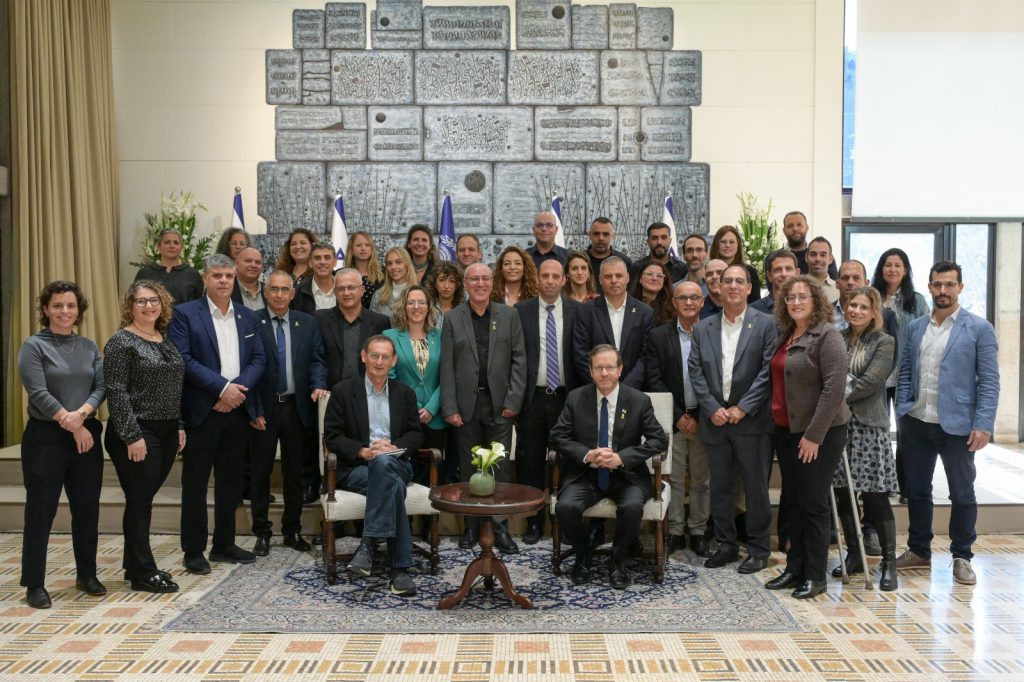
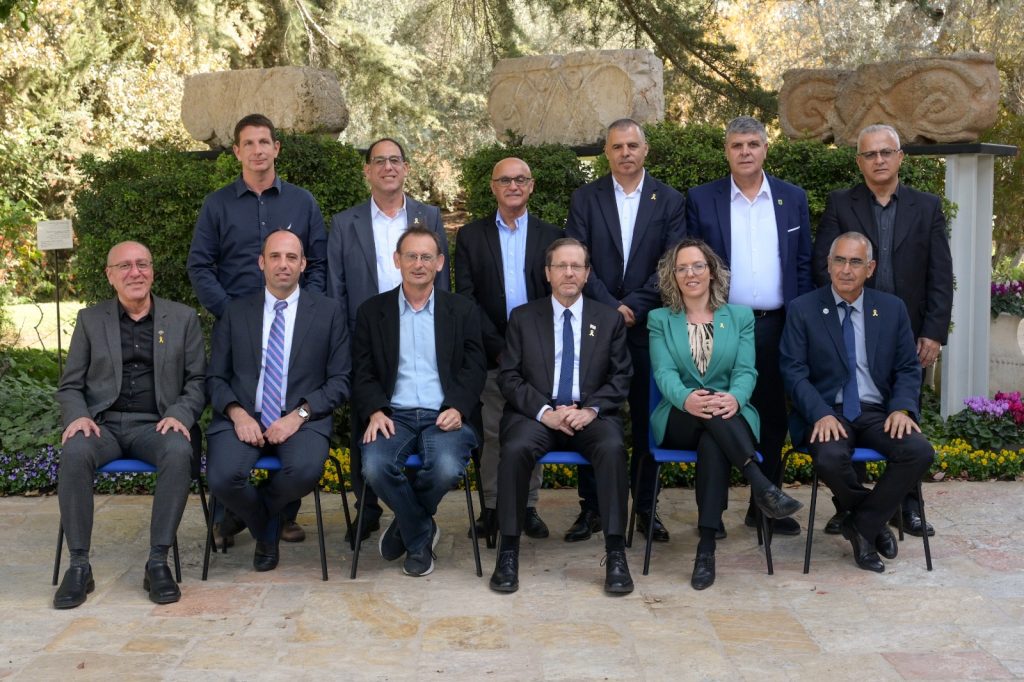
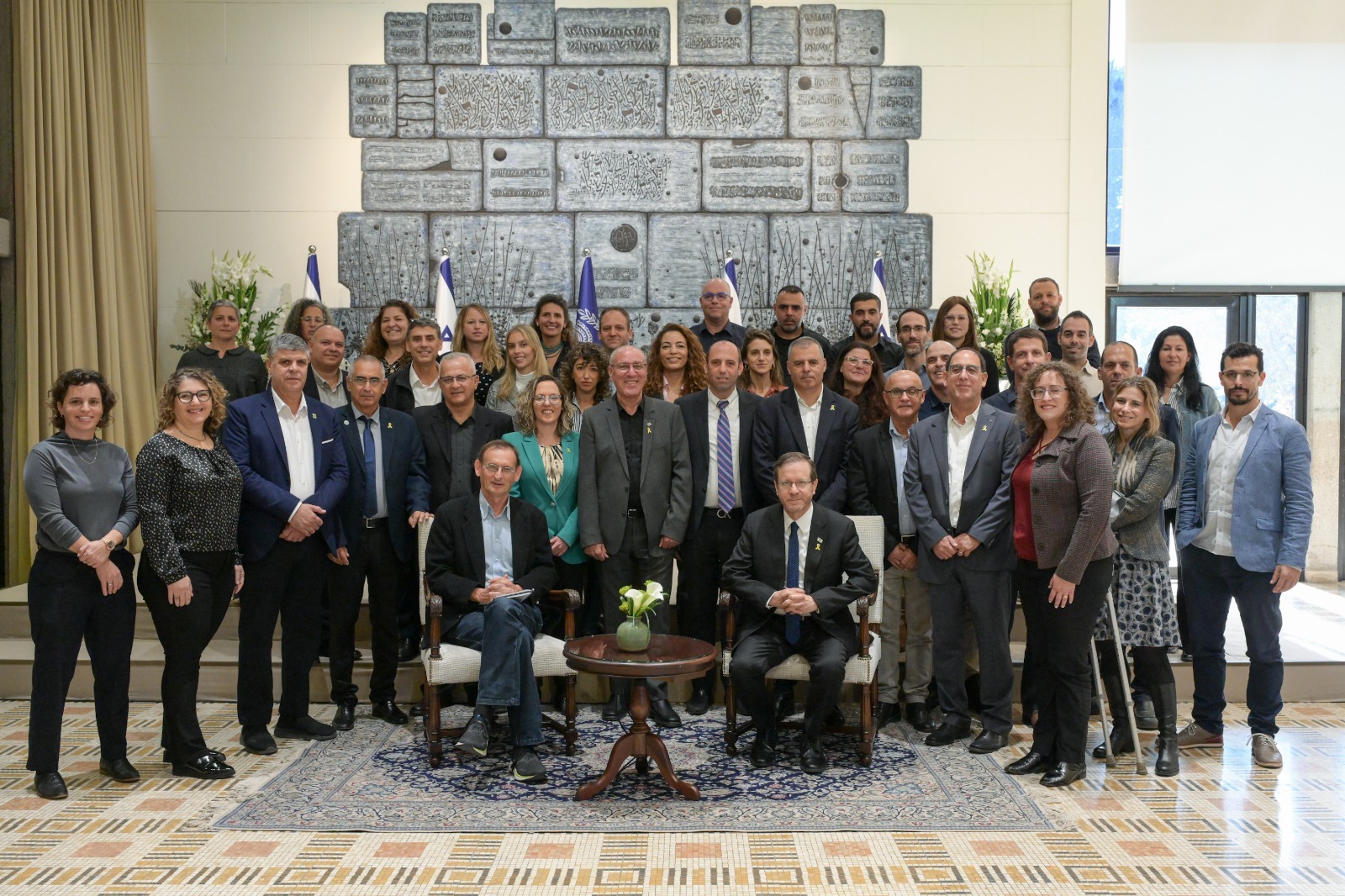
The heads of the authorities will become a leadership team that advances the field personally and under the patronage of the President of Israel.
The elected authorities will establish and lead a professional community, which will cooperate in assimilating policies and providing practical tools relevant to the process each authority has chosen to promote.
Umm al-Fahm Municipality | Dr. Samir Mahamid
- Reducing fires as a result of dumping waste, preparing to reduce the impact of fires on the environment, establishing and training neighborhood emergency teams for immediate response.
Eilat Municipality | Eli Lankri
- The authority set itself 2 different ambitious goals. One, a climate neighborhood pilot. The second, reducing the private car travel of the city's residents and tourists spending time in Eilat, increasing the infrastructure for electric transportation in the city (public and private), encouraging the use of public transportation, by bicycle and on foot.
Eilat's geographical isolation and extreme desert climate highlight the need for resilient, sustainable communities. A climate neighborhood model will reduce the city's dependence on central Israel, help residents adapt to climate change, and prepare for extreme weather events like heatwaves and floods.
The success of this model in the Yaelim neighborhood will enable replication in other areas, particularly vulnerable ones, strengthening Eilat’s climate resilience and serving as a model for other desert cities.
The initiative will also address transportation challenges by reducing private car use, increasing electric public transport, and improving residents' and tourists' quality of life. Using renewable energy for transport will enhance Eilat’s energy and transportation independence while promoting sustainable urban behavior.
Beit Shemesh Municipality | Shmuel Greenberg
Establishment of at least 2 urban storage facilities for emergency response, creating a knowledge and resilience center for residents and business owners, and installing PV systems in confined areas within the local authority.
Brenner Regional Council | Doron Shidlov
- The goal of conservation, restoration and development of the streams - Nahal Shork and the establishment of a system of stream paths along Nahal Shorak and its large tributaries.
The plan seeks to change the public attitude to the area of the stream, from a necessary infrastructure to prevent flooding that is a burden to turning it into an ecological and cultural asset that improves the quality of life of those living along the stream. The change will be created with the participation of the community and other factors in the space, will increase social awareness of nature, ecology and the importance of preserving the space for future generations.
The project offers an organizational, operational, social, community and cultural environmental model and the transformation of river channels that are used as essential infrastructure for the flow of runoff and flood prevention, which is currently a burden on the various authorities, which will lead to proper management of natural resources and assessments of climate changes in the area and an asset that yields leisure culture, promoting environmental awareness of the authority .
Gezer Regional Council | Rotem Yadlin
- Developing a model for managing open spaces, including a work plan, management framework, and an interdisciplinary collaboration platform. A hybrid public participation platform will also support the initiative.
The goal is to integrate ongoing processes into the council’s operations, ensuring open spaces are of higher quality, managed sustainably, and contribute to environmental resilience, agricultural preservation, food security, runoff management, ecological corridors, biodiversity, soil conservation, and carbon sequestration.
This initiative will enhance environmental and climate resilience for the council and its neighboring communities.
Jaljulia Local Council | Derwish Rabi
- The first energy reset council in Israel, and the leader in the Arab society and in Israel on issues of sustainability, climate and environment and will be a knowledge center for learning and innovation on the subject. In addition, the council will completely complete the restoration of Nahal Kana that runs through the settlement and establish at least three more green public spaces for the residents' well-being by the end of 2027.
The project will allow the Jaljulia Local Council to also benefit from additional sources of income – an acute need in the authority for its economic resilience. Also on the environmental – climatic side – the council will produce energy in a green and advanced way, which will lead to reduced emissions and reduced air pollution. The council aims to bring the revolution to the residents as well, which will lead to strengthening the economic resilience of the residents of the authority, and encouraging a significant percentage of residents to carry out actions that will lead to reduced emissions and air pollution and environmental resilience.
Municipality of Herzliya | Yariv Fisher
- Establishing a network of urban resilience centers and training operation and management teams to respond to environmental emergencies and Alta scenarios.
The Authority will be able to provide an answer of:
- Cooling or heating according to the extreme environmental conditions that will prevail at that point
- The possibility of having logistics operation and response centers (communication, lighting, charging and more)
- Possibility to respond to the medical/military teams that will come to the city for backup
Such an urban move has not yet been made - deployment of a network of energy resilience centers. As soon as this happens, the authority will be able to provide service both during climatic stress and during other emergencies, this will be seen as the right move for other authorities and there is no doubt that it will be copied.
Kfar Saba Municipality | Rafi Saar
- A municipality with an energy reset of 60% production compared to consumption, and this will be achieved by: 15% efficiency in municipal energy consumption, increasing renewable energy production by 50%, and about 10 innovative pilots to create green energy.
The move proposed by the Kfar Saba Municipality is an ambitious, detailed, operational and measurable plan for a significant energy reset between energy production and energy consumption. Kfar Saba as an authority intends to continue to be a national pioneer in many programs and to integrate innovative solutions that will enable ScaleUp and be a source of inspiration for other cities. The city already has pilots to test innovative solutions and is collaborating with other cities in peer learning processes.
The variety of options detailed in the plan constitutes a leap forward in realizing the vision for a zero-energy municipality.
Pardes Hana-Karkur local council | Yoni Hakimi
- An integrated energy move that will include an energy reset of the local council, expanding energy production, and improving energy security through storage.
The local government is leading a regional movement to close the coal-fired power plants in Orot Rabin, and therefore it is only right and proper that it lead the transition to renewable energy and become a national model for a significant transition to renewable energy production in the urban area.
The initiative addresses this challenge by creating a sustainable and resilient energy system that will ensure the Authority's long-term energy resilience. Through the goals presented above, we will create an independent system that will reduce dependence on external sources and allow us to balance local energy demand and supply even in times of emergency. We will be able to ensure continuity in the supply of electricity to public buildings and essential services, thus maintaining the quality of life for residents even in extreme conditions. The proposed initiative will be a source of learning and inspiration for other authorities thanks to its ambition, innovation, and leadership in the field of renewable energy and energy security. The Authority will present a broad model of transitioning to net zero energy, while reducing dependence on external sources and implementing advanced technologies such as photovoltaic systems, smart energy management, and local storage systems. The combination of advanced infrastructures along with cooperation between the public, private, and environmental sectors will position the Authority as a pioneer in this field.
In addition, the move will improve the quality of life of residents, reduce greenhouse gas emissions, and strengthen energy security in times of emergency. Its success will transform the authority into a national knowledge center, and provide a viable model for other authorities interested in integrating economic and environmental sustainability into local government.
Municipality of Rehovot| Matan dil
A pilot for a zero-energy neighborhood. A collaboration between the Municipality of Rehovot and the Weizmann Institute that will provide a solution to a significant urban challenge – the electricity supply does not match the city's development plan.
The city of Rehovot is in an energy crisis. There is one TAM-E in Sitriya, another under construction, and another TAM-E in Tamar B, which will take a few more years to be operational and will also serve mainly neighboring Nes Ziona. The TAM-E 3003 neighborhood is a plan for a new urban district in the east of the city that will naturally become a significant energy consumer. Carrying out a neighborhood pilot of a transition to renewable energies together with storage solutions can reduce dependence on the national transmission grid, strengthen the city's energy security, and the success of the pilot could lead to the project being transferred to additional neighborhoods - new and built.
The presented move will create a pilot of a micro grid neighborhood, which will be able to be copied to other neighborhoods and local authorities as well.